Published on:
2 October 2025
Share this:
Flooding remains one of the most prevalent natural hazards worldwide, affecting millions of lives annually. Countries are witnessing how floods are a continuous threat, destroying homes, damaging infrastructure, and disrupting lives at local and regional levels, with impacts rippling out to national and global scales. With major shifts in precipitation patterns, floods are becoming more frequent and severe. But in the face of these challenges, local leaders across the globe are stepping forward to build resilient communities.
To support local flood managers, WWF’s Environment and Disaster Management team developed Natural and Nature-Based Flood Management: A Green Guide (Flood Green Guide or FGG). The guidebook and training courses introduce and promote practical, nature-based approaches to flood management. Since launching the FGG training, WWF has reached over 470 participants from more than 30 countries. Recently, the team created a virtual, self-paced course that combines interactive lessons with live sessions. The hybrid training enables participants worldwide to learn and apply key concepts directly to their communities.
In this story, two Filipino participants, Louis Emmanuelle Talaguit and Dainty Clarice Rabang, share how the course has shaped their work on the ground.
Louis’ Community Efforts
Louis Emmanuelle Talaguit vividly remembers the floods that devastated his hometown Iriga, in the Bicol region, in October 2024. Working previously with the city’s Disaster Risk Reduction and Management Office and the Philippine Institute of Volcanology and Seismology, Louis had seen the limitations of traditional flood management methods. Then he founded a volunteer group called “Tinarabangan Iriga,” meaning “Helping Hand”. The goal was to shift local mindsets toward more sustainable flood solutions.
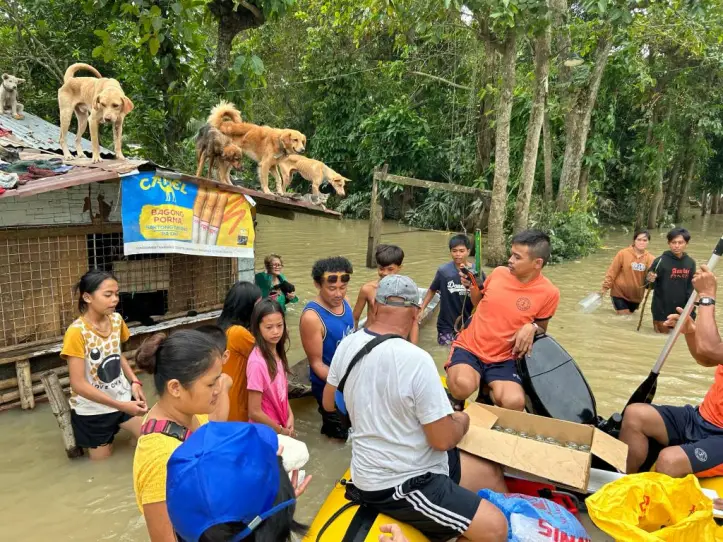
“We were losing a lot of money on projects that didn’t address the real problems,” Louis reflects. “Flooding isn’t just a hazard – it’s a natural phenomenon.”
Determined to find better solutions, Louis participated in WWF’s Flood Green Guide online training course. There he discovered the importance of integrated watershed management, such as addressing flooding not just within city limits, but on the basin scale. The course changed his perspective on flood solutions. He realized the value of moving beyond traditional “grey” infrastructure like dams and embankments, toward integrated approaches such as watershed rehabilitation.
Louis was particularly interested in the community engagement module of the course.
“Community engagement should be integrated in every part of the flood management process,” he explains.
Now, Louis plans to use these insights to advocate for green and nature-based solutions through awareness, education, and cooperation in his local community. He will do this as part of the larger regional network, Tarabangan – Bicol, his local NGO that aims to raise awareness, promote alternative solutions, and push local politicians to prioritize conservation and nature-based approaches.
Dainty’s Call for Collaboration
Across the waters in the beautiful island province of Palawan, Dainty Clarice Rabang, a geologist working at the provincial Disaster Risk Reduction Office, faces similar challenges.
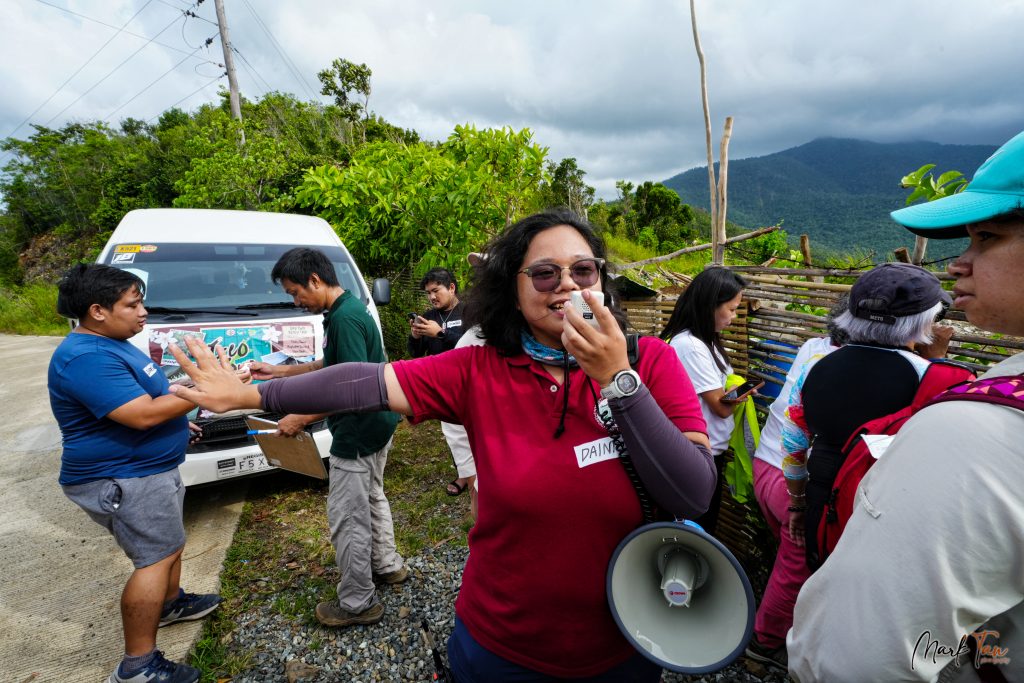
Dainty sees flood management not just as a technical challenge, but as an interconnected issue that requires collaboration. She explains how difficult it is to align different government offices with overlapping mandates. Throughout the Flood Green Guide course, Dainty has applied insights directly into her government role, starting discussions with local officials and colleagues. She sees the value in courses like the Flood Green Guide: “They help bridge the gap between technical knowledge and local realities.”
Dainty, similar to Louis, also wants to integrate community perspectives into government interventions on disaster management response, ensuring programs reflect the needs of local communities.
She also believes in the power of young people to drive change, whether through local cleanups, awareness campaigns, or education. She has seen promising efforts in her province – farmers adopting new agricultural practices, and communities building water-impounding basins and terraces to reduce flooding.
Working Together on Flood Solutions
Louis and Dainty’s stories show a shift happening in the Philippines and around the world, toward community-led, practical ways to manage flood risk. Working with local people, using nature-based solutions, and thinking more broadly about flood risks can make a difference. Floods might be inevitable, but devastation doesn’t have to be.
If you are interested in the Flood Green Guide and training courses, please contact us by email [email protected]